
Evaluation feedback can be a sensitive issue…

Evaluation feedback can be a sensitive issue…
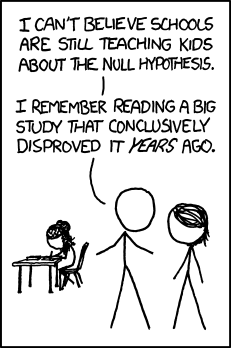
This week’s funny is again brought to you with the courtesy of xkcd. It demonstrates, quite adequately, what can go wrong in the process of interpretation of data.
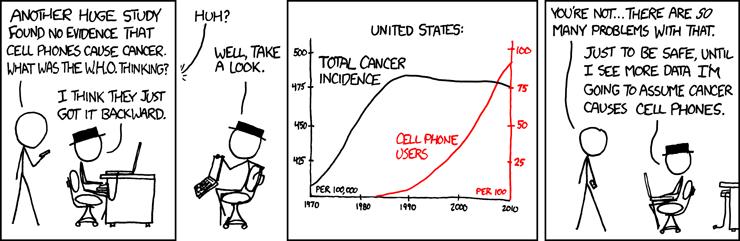
Compliments of Spiked Math

as the most sophisticated statistical software on the market…” Says dog house diaries.
(Click for larger pic)

Close observations of “Spikkels” and “Trompie”, my resident English Springer Spaniels, provide anecdotal evidence to support this theory. The Spaniels will have to try their tricks on the other “boss person” in our household for a few days. I’m off to East-Africa for a bit of work.
Pie charts are sometimes the most effective way to represent data, but sometimes, they are really useless. Dog house diaries provide an example of the latter
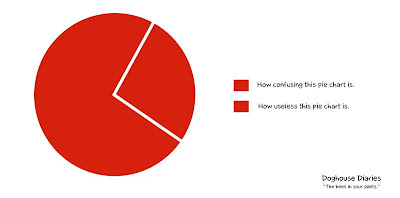
(Click on pic for a larger image)

Or… if you are not into bears or thieves, calculate the probability of these three intersecting:
Some people have faulty logic, some have statistical skills, and some have no life.
The following comic from doghouse diaries, and the results of an actual colour survey at xkcd tells you a little about the validity of surveys…

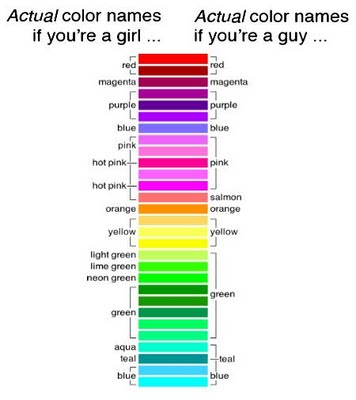
The write-up about the “male / female” categories and the controls they tried to implement for color blindness at the xkcd blog is also something worth reading.
This week, a vicious rumour circulated that the speech below was delivered by a mayor of a large South African city.
Barrie Bramley, writes that it is, however, an unedited clip recorded by an actor for a milk advertisement.
Both the vicous rumour, and the contents of the clips have some lessons for evaluators:
1. Using big words in your reports and presentations will not hide an incoherent argument
2. Being long-winded bores your audience and delays tea
3. Sources should be double checked ALWAYS!
4. Comments made should be based on checked facts.
Have a lovely week!
I had to calculate Cohen’s d, Eta Squared and r today, but thought that would be too dreary a topic for a Friday blog post.
Instead, I found some statistics quotes here
Some of my favourites:
Torture numbers, and they’ll confess to anything. ~Gregg Easterbrook
He uses statistics as a drunken man uses lampposts – for support rather than for illumination. ~Andrew Lang
Statistics can be made to prove anything – even the truth. ~Author Unknown
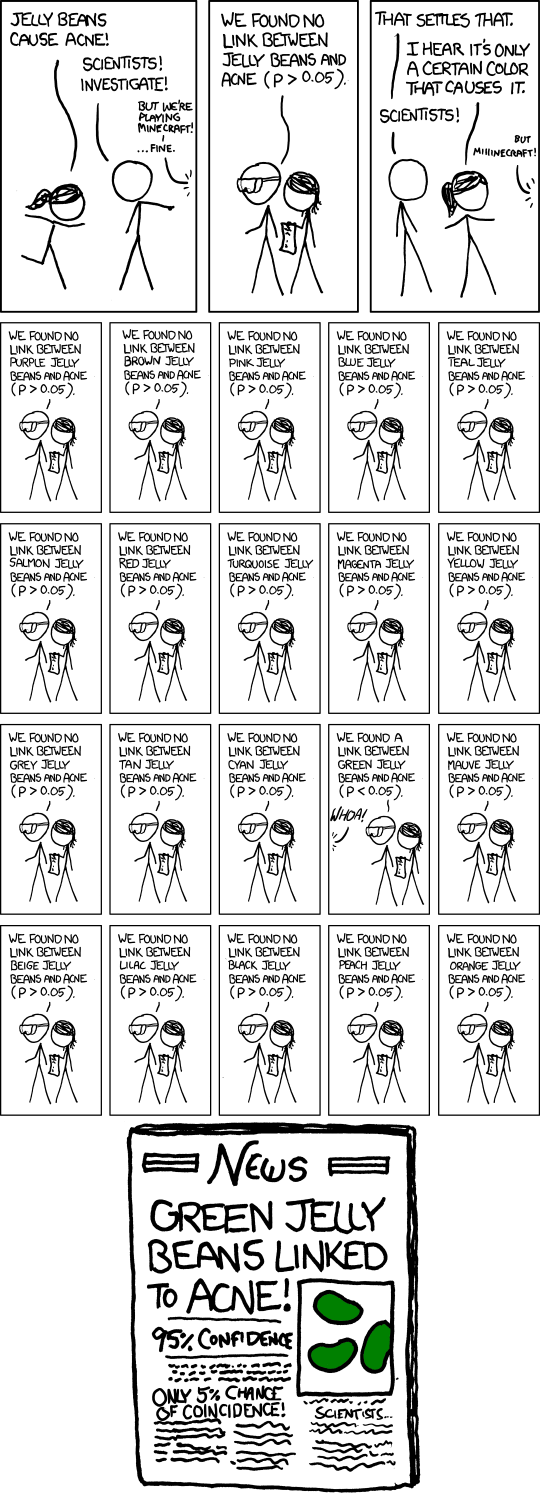
XKCD says it best
Aid on the edge posted a little satirical cartoon that made me reflect on the value of “development” as we do it these days.
See: http://aidontheedge.info/2011/03/23/there-you-go/
But that is only one side of the coin:
A friend once told me that he worked in development in Africa, and admitted to forcing a Western idea of education into a local village many years ago. The contemporary wisdom is that one should rather embrace indigenous knowledge systems and community structures. When he went back many years later, he wanted to “repent” of his youthful folly.
When he got there, there wasn’t much left of the village. Sadly climate change has wreaked havoc and the village’s agricultural lifestyle could not longer be sustained. If it wasn’t for the “out of place” education initiative that my friend started many years earlier, there would have been no livelihood for the villagers. At least the kids who got educated, got out. They were now earning a living in another way, sending back some money.
I’m not suggesting that forcing education was the right thing to do, but we can also not blame the education and local development for climate change that is happening on a global scale and would have had an effect irrespective of whether development came to that corner of Africa or not.
A quantitative evaluator, a qualitative evaluator, and a normal person are waiting for a bus. The normal person suddenly shouts, “Watch out, the bus is out of control and heading right for us! We will surely be killed!”
Without looking up from his newspaper, the quantitative evaluator calmly responds, “That is an awfully strong causal claim you are making. There is anecdotal evidence to suggest that buses can kill people, but the research does not bear this out. People ride buses all the time and they are rarely killed by them. The correlation between riding buses and being killed by them is very nearly zero. I defy you to produce any credible evidence that buses pose a significant danger. It would really be an extraordinary thing if we were killed by a bus. I wouldn’t worry.”
Dismayed, the normal person starts gesticulating and shouting, “But there is a bus! A particular bus! That bus! And it is heading directly toward some particular people! Us! And I am quite certain that it will hit us, and if it hits us it will undoubtedly kill us!” At this point the qualitative evaluator, who was observing this exchange from a safe distance, interjects, “What exactly do you mean by bus? After all, we all construct our own understanding of that very fluid concept. For some, the bus is a mere machine, for others it is what connects them to their work, their school, the ones they love. I mean, have you ever sat down and really considered the bus-ness of it all? It is quite immense, I assure you. I hope I am not being too forward, but may I be a critical friend for just a moment? I don’t think you’ve really thought this whole bus thing out. It would be a pity to go about pushing the sort of simple linear logic that connects something as conceptually complex as a bus to an outcome as one dimensional as death.”
Very dismayed, the normal person runs away screaming, the bus collides with the quantitative and qualitative evaluators, and it kills both instantly…Very, very dismayed, the normal person begins pleading with a bystander, “I told them the bus would kill them. The bus did kill them. I feel awful. To which the bystander replies, “Tut tut, my good man. I am a statistician and I can tell you for a fact that with a sample size of 2 and no proper control group, how could we possibly conclude that it was the bus that did them in?”
* On that note, however, I reject all the talk that the singing of a song CAUSED the death of a man. It may have been a contributor, but I doubt it was either a necessary or sufficient circumstance for this specific death!
http://www.news24.com/SouthAfrica/News/Spike-in-race-tensions-institute-20100406
